Energy transition
The skills that transfer from oil and gas to offshore wind
A practical note for hiring managers on which North Sea disciplines move well into offshore wind, and what does not come across with them.
WeConnect Energy, 6 November 2026
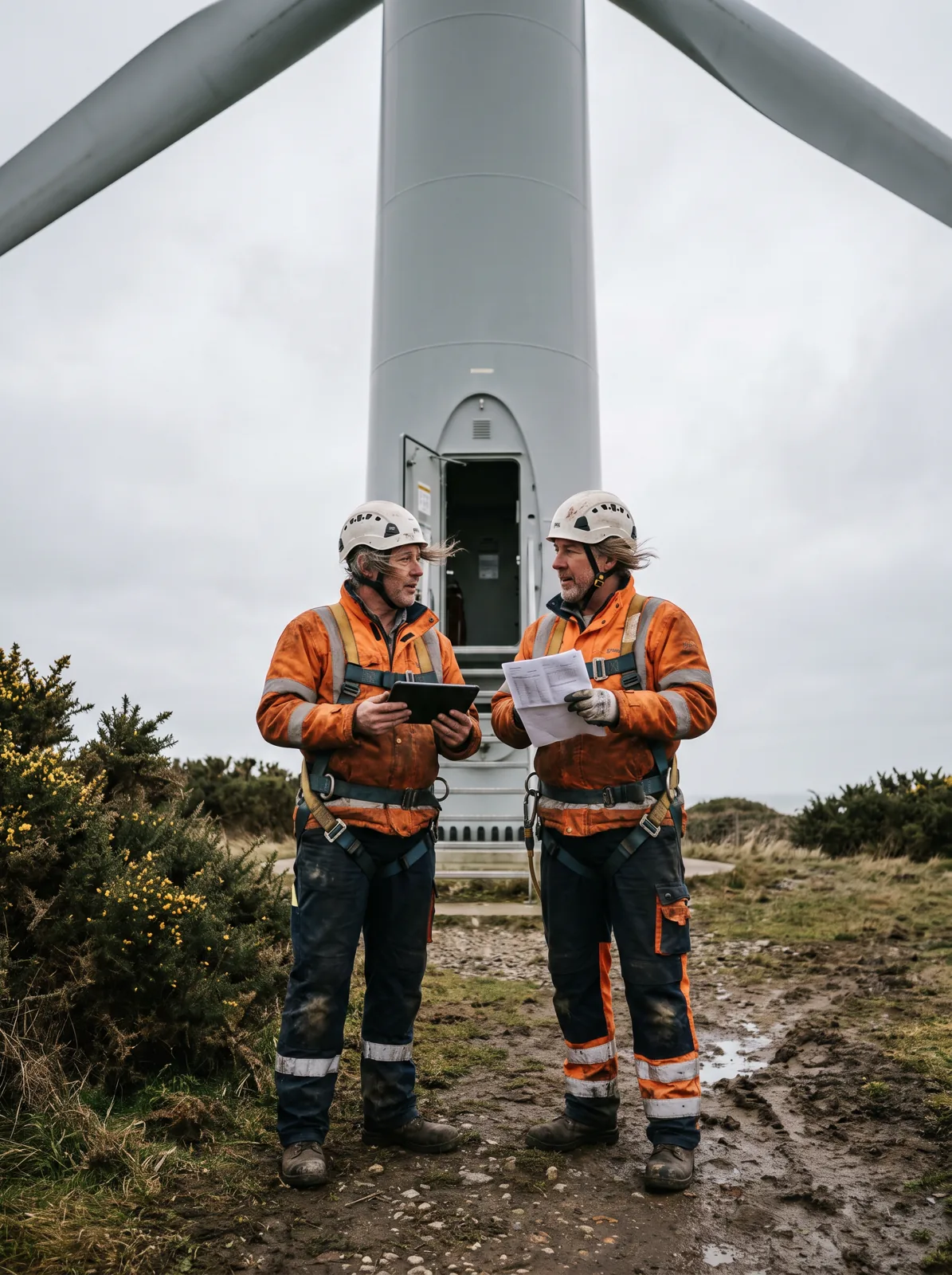
Offshore wind farms are built and run by the same disciplines that built and ran offshore oil and gas: project and construction engineering, marine operations, commissioning, electrical and controls, and HSE. The people are often the same too. The difference lies in the standards, the kit and the rhythm of the work, and a good brief says which of those matter for the role.
What moves across well
Project and construction engineering. Planning, interface management, contractor supervision and the paperwork of getting a structure built at sea are the same craft on a jacket, a monopile or a substation platform. Engineers who have run offshore campaigns know weather windows, vessel schedules and the cost of a missed lift.
Marine and installation coordination. Marine coordinators, client representatives and installation engineers from oil and gas bring vessel chartering, simultaneous operations and permit discipline that wind projects need from the first foundation to the last cable pull.
Commissioning. Mechanical completion, loop checking, energisation and handover follow the same logic whether the asset is a processing platform or an offshore substation. Commissioning engineers and managers transfer with little retraining.
HSE. Permit to work, risk assessment, working at height, confined space and lifting operations are common ground. HSE advisers from offshore oil and gas already speak the language of a wind site.
Electrical and controls. High voltage, protection, SCADA and cabling specialists move well, and are in short supply on both sides.
What does not transfer by itself
Safety training differs. Offshore wind sites generally ask for the Global Wind Organisation (GWO) basic safety modules, while oil and gas platforms ask for OPITO survival and emergency training. Many people hold both, but a brief should say which is required on day one and which can be arranged after the offer.
Turbine-specific knowledge is learned on the job or in a manufacturer's course. A commissioning engineer from gas processing can lead substation commissioning straight away, but turbine commissioning is a different system with its own procedures.
Rotation patterns and rates differ between the two sectors, and so do the contracting terms. Someone who has only worked a platform rotation may not expect a service operation vessel schedule or a two-week onshore swing.
What to put in a wind brief
- The stage of the project: development, construction, commissioning or operations, because the mix of disciplines changes at each stage.
- Whether the role is on a vessel, a substation, a turbine or onshore.
- The safety and medical certificates needed before mobilisation, and which the project will fund.
- The rotation, the start date and the expected duration, or the permanent scope.
- Whether oil and gas experience is welcome, preferred or required.
WeConnect Energy has supplied these disciplines to energy projects since 2008, on contract and permanent, from Edinburgh and Abu Dhabi. The Energy transition hub sets out the skills that transfer in more detail, and the wind page lists the roles we place.
Hiring for a wind project?
Engineering, project, construction, commissioning and operations specialists for onshore and offshore wind, on contract and permanent, in the UK and the Middle East.
Brief us on a wind roleHow we work in windNext: what a hydrogen project needs at each stage