Energy transition
What a hydrogen project needs at each stage
From feasibility to operations, the disciplines a hydrogen project calls for, and why most of them already exist in gas processing and pipelines.
WeConnect Energy, 6 November 2026
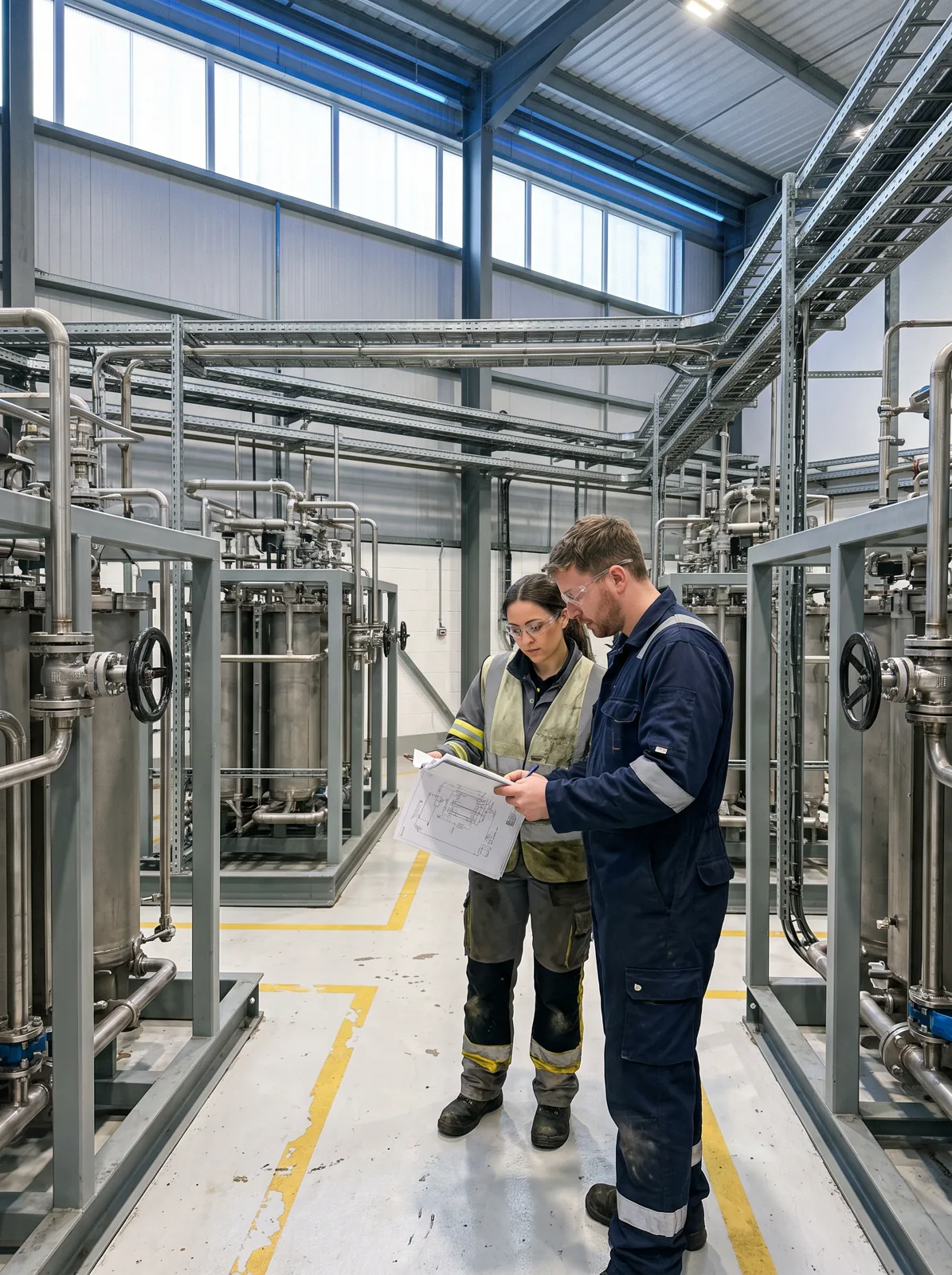
A hydrogen project is a process plant with a pipeline or a storage facility attached. Whether the hydrogen is made by electrolysis or from natural gas with carbon capture, the work of designing, building and running it belongs to the disciplines that have built gas processing plants and pipelines for decades. What changes from stage to stage is which of those disciplines you need, and in what number.
Feasibility and FEED
The early stages are led by process engineers, with cost, planning and consenting specialists alongside them. The questions are about the hydrogen source, the pressure and purity the offtaker needs, where the plant sits in relation to power and water, and how the product gets to market. Process safety starts here, not later: the hazard studies that shape the layout are done before detailed design begins.
Typical roles: process engineers, process safety engineers, project managers, cost and planning engineers, consenting and permitting leads.
Detailed design
Design widens to the full multi-discipline team. Piping and pipeline engineers handle hydrogen's particular demands on materials and leak prevention. Electrical and power systems engineers size the supply to the electrolysers, often the single largest load on the site. Instrumentation and control engineers specify the safety systems and the plant control system. Civil and structural engineers design the foundations, bunds and buildings.
Typical roles: piping and pipeline engineers, materials and corrosion engineers, electrical and power systems engineers, instrumentation and control engineers, civil and structural engineers, interface managers.
Construction
Construction brings site management, construction engineers and supervisors, and the quality and HSE teams that keep a live site safe. Hydrogen sites tend to be compact compared with a refinery, but the mix of high voltage equipment, high pressure gas and rotating machinery calls for supervisors who have worked around all three.
Typical roles: construction managers, site managers, construction engineers and supervisors, QA and QC inspectors, HSE advisers.
Commissioning
Commissioning is where hydrogen projects most often run short of people. Mechanical completion, loop checking, leak testing, nitrogen purging and the first introduction of hydrogen all need commissioning engineers and technicians who have done the equivalent on gas plants. Control system and SCADA engineers finish the job by proving the plant runs as designed.
Typical roles: commissioning managers, commissioning engineers and technicians, DCS and SCADA engineers, permit to work coordinators.
Operations
Once in service, the plant needs operators, maintenance engineers and technicians, and the planners and HSE staff who keep it running. Many hydrogen operators come from gas processing and chemicals, where the operating discipline is already established.
Typical roles: plant operators, maintenance engineers and technicians, operations managers, HSE and process safety advisers.
Where the people come from
Most of these disciplines exist today in gas processing, pipelines and petrochemicals. The transfer is direct for process, piping, pipeline, safety and commissioning, and short for electrical and control engineers who learn the electrolyser package. A brief that says which stage the project is at, and which disciplines are needed now rather than next year, gets a better shortlist faster.
WeConnect Energy has supplied these disciplines to energy projects since 2008, on contract and permanent, from Edinburgh and Abu Dhabi. The hydrogen page lists the roles we place, and the Energy transition hub sets out the skills that transfer from oil and gas.
Hiring for a hydrogen project?
Process, piping, pipeline, safety and commissioning specialists for hydrogen production, storage and transport, on contract and permanent, in the UK and the Middle East.
Brief us on a hydrogen roleHow we work in hydrogenAlso: the skills that transfer to offshore wind